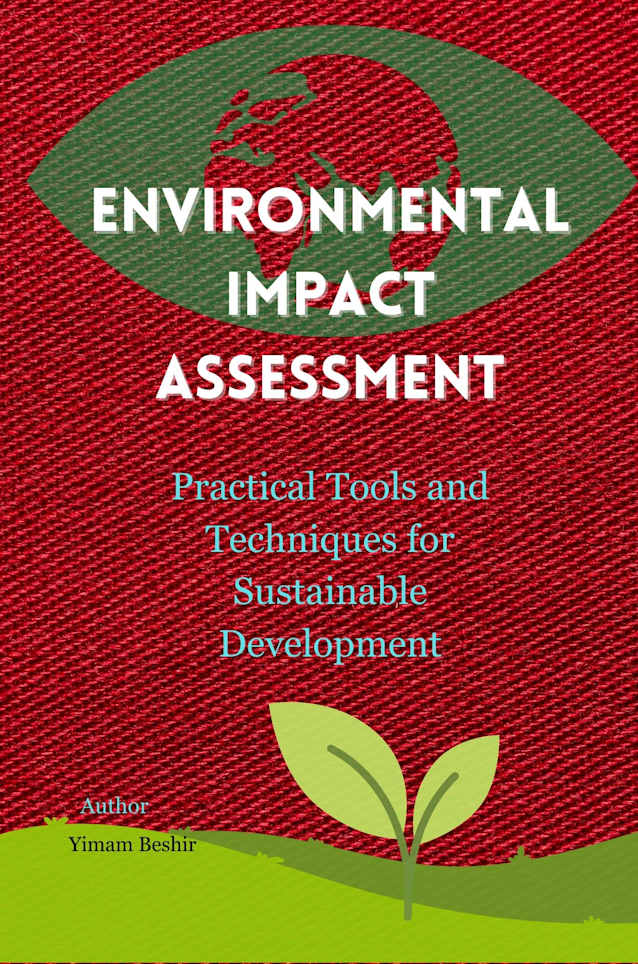
Environmental Impact Assessment Practical Tools and Techniques for Sustainable Development: Environmental Impact Assessment Practitioners guide for Sustainable ... Tools for Climate–Health Decision-Making)
About
EIA: Practical Tools and Techniques for Sustainable Development
(Optional Subtitle: An EIA Practitioner’s Guide for Sustainable Development)
Environmental Impact Assessment (EIA) is a critical pillar of sustainable development, bridging economic progress with environmental responsibility. In this clear, practical guide, public health specialist and environmental advocate Yimam Beshir offers a comprehensive resource for professionals, students, and policymakers dedicated to responsible project planning and implementation.
This book provides a step-by-step roadmap to understanding and applying EIA across diverse sectors. From early project screening and scoping to impact prediction, mitigation, and post-implementation monitoring, each chapter delivers actionable tools and expert insights that support environmentally sound and socially responsible decisions.
✅ What You’ll Learn:
Step-by-Step EIA Methodology
Practical guidance through every stage of the EIA process, illustrated with real-world examples and best practices.Essential Tools & Techniques
Proven methods for data gathering, environmental risk analysis, public health integration, and community engagement.Legal and Ethical Foundations
Insights into international regulations, ethical frameworks, and the role of environmental policy in shaping sustainable futures.Sustainability in Practice
How to align development goals with environmental, social, and economic priorities for truly sustainable outcomes.
Whether you’re an environmental consultant, public health officer, NGO worker, or student in environmental studies or urban planning, this book is your hands-on companion to mastering EIA in real-world contexts.
EIA: Practical Tools and Techniques for Sustainable Development is more than a textbook—it’s a call to action for creating balanced, informed, and sustainable projects that meet today’s needs without compromising tomorrow’s future.